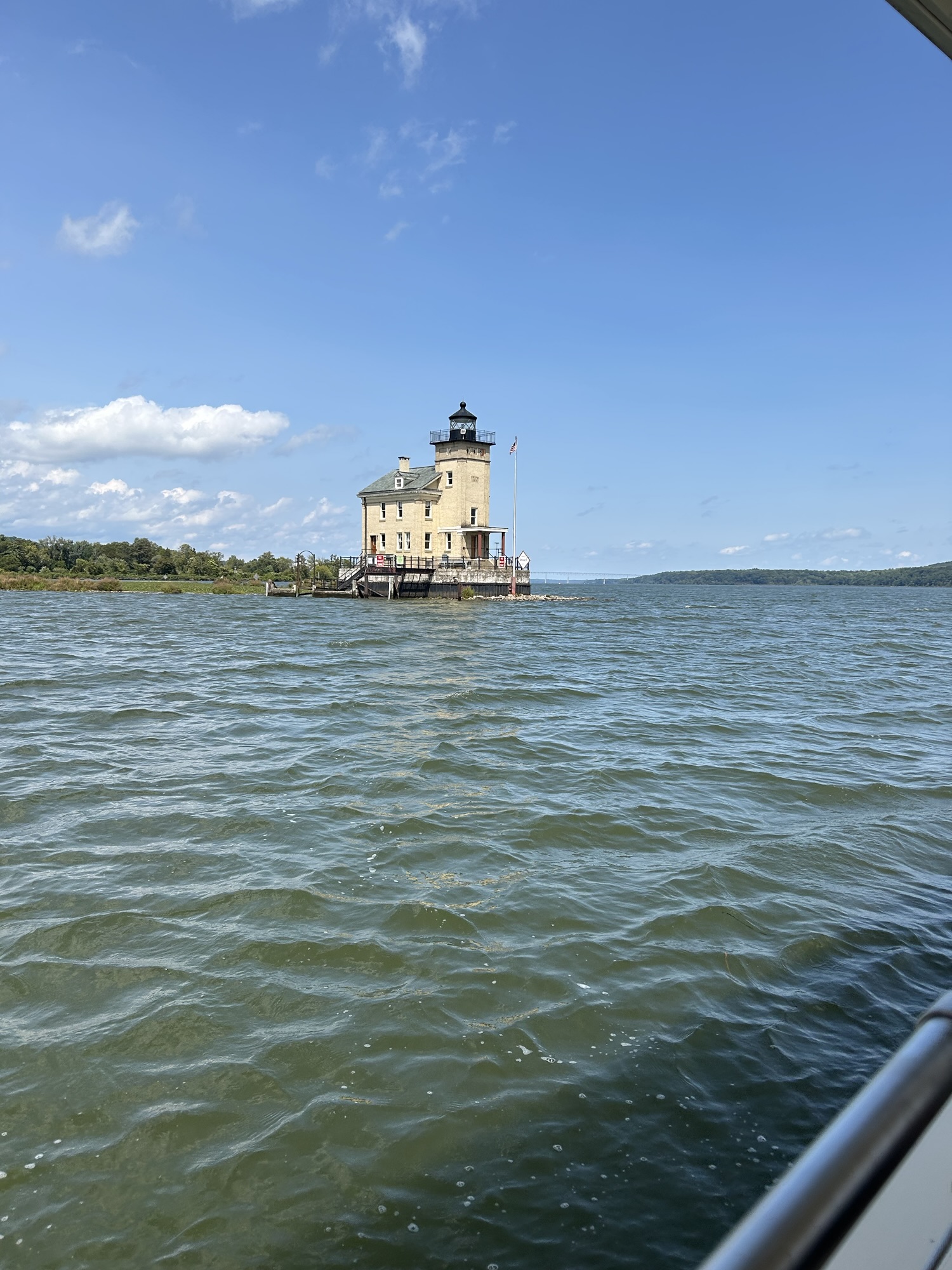

Okay, granted, the river’s been used for nigh on 300+ years for commerce but I didn’t know the lighthouses were so endemic. And the lighthouses have existed for the past 200 years or so.
We went over to the Rondout lighthouse on a solar powered boat (hooray! The first boat of its kind, the coast guard made them traverse the Hudson from Albany and back to prove it’s… it’s… well, not seaworthiness, exactly, but at least it’s floaty boaty properties.)
Awesome. Totally awesome. No, you don’t plug it in. It has solar panels all over the roof and batteries in the hull.
So off we silently glide to the lighthouse, me, my sister and Beloved along with maybe eight other people.
The Rondout Lighthouse was completed in 1915, at a cost of $37,500 ($1.2 million in today’s dollars). They’d had two other lighthouses before that, but the sum total of the remnants of those is a circular little island too far in past the breakwater to be of any use.
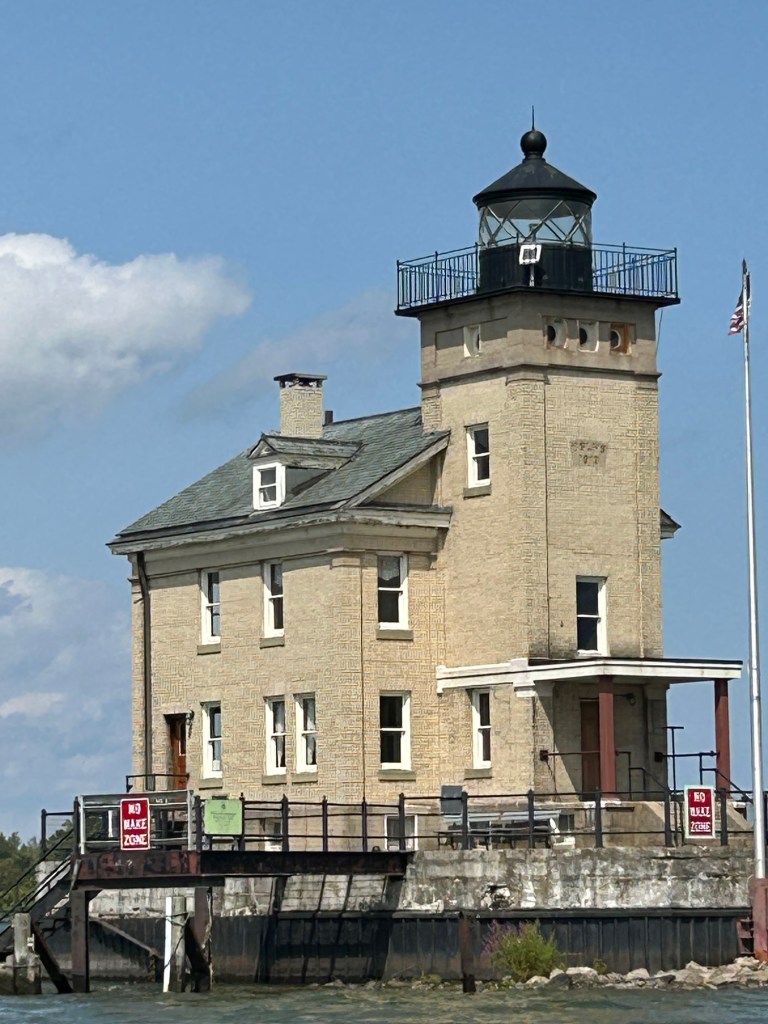
It’s astonishingly well preserved… probably because it was so well constructed to begin with. The building is stone, and the stairwell is lined with subway tile with cast iron steps and bannisters. The attic floor is made of concrete and the roof is bluestone.
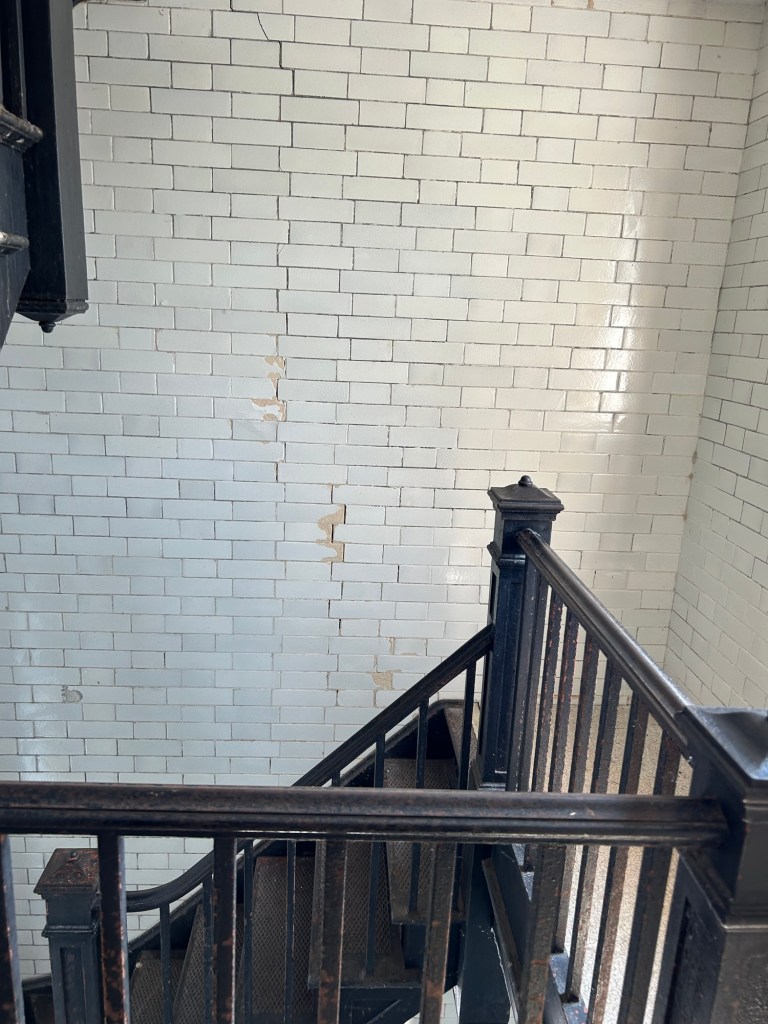
Ah… yes… there was a reason, actually.
Until the 1950s, the light was powered by… kerosene (which replaced the use of whale oil…). Giant drums of the stuff were stored in the attic (hence the concrete floor), then the keeper carried 32 pound loads of the incendiary fluid from the attic to the light itself, which kept the sailors from unfortunate mishaps.
There was no wood at all because… well… spills happen, kerosene is known to soak into porous materials, and that would’ve been a bummer had there been any kind of flame around.
And it was… y’know… a lighthouse.
These pre-electric days make it seem like there was just a bonfire on the roof, burning away, but for all these folks didn’t have computers, they sure as hell weren’t stupid.
Starting in the 1820s, lighthouses used Fresnel (FREY-nell) lenses to refract and control the light.
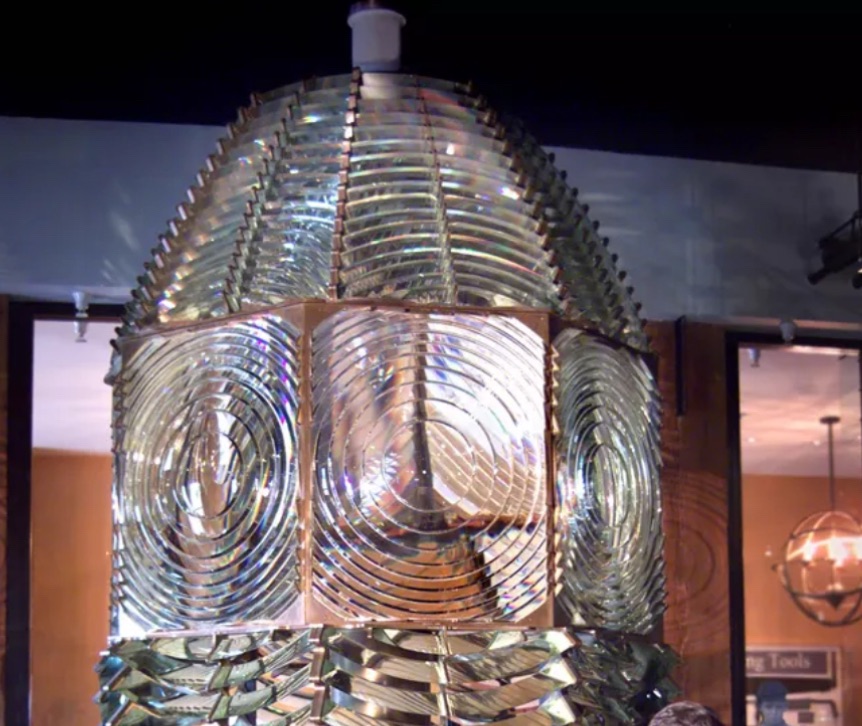
They’re made of hundreds of pieces of glass put together to focus the light behind them into a single, concentrated beam.
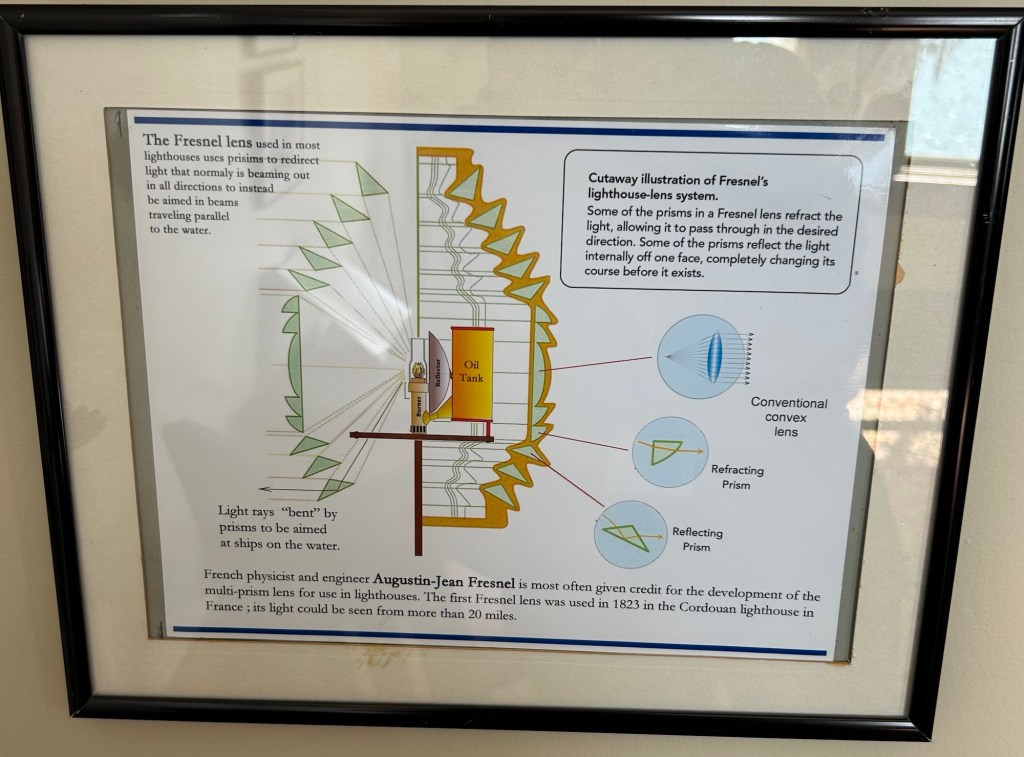
The lighthouse versions were wind-up, so the lens revolved, sending the high powered beam out in a circular motion across the horizon for x number of seconds at x second intervals (called their “characteristic”).
The mariners kept logs of each lighthouse’s characteristic as well as the color of the beam so they knew where they were in relation to the land.
The lens in the lighthouse is long gone, but it saved many a sailor in its day.
They had a woman, Catherine Murdock, manning the Rondout lighthouse for more than 50 years, starting in 1856. She moved into the second incarnation of the lighthouse when she was pregnant with her third child, and in less than a year her hubs managed to (allegedly) get snockered and.. well… drowned.
Three kids under five, she went to Congress and asked if she could please take over his position. She’d been doing the work already, keeping the light going after ole George did a header into the river, so…
Astonishingly, they said yes. Not only that, a few years later they gave her a range to cook with when she asked for it.
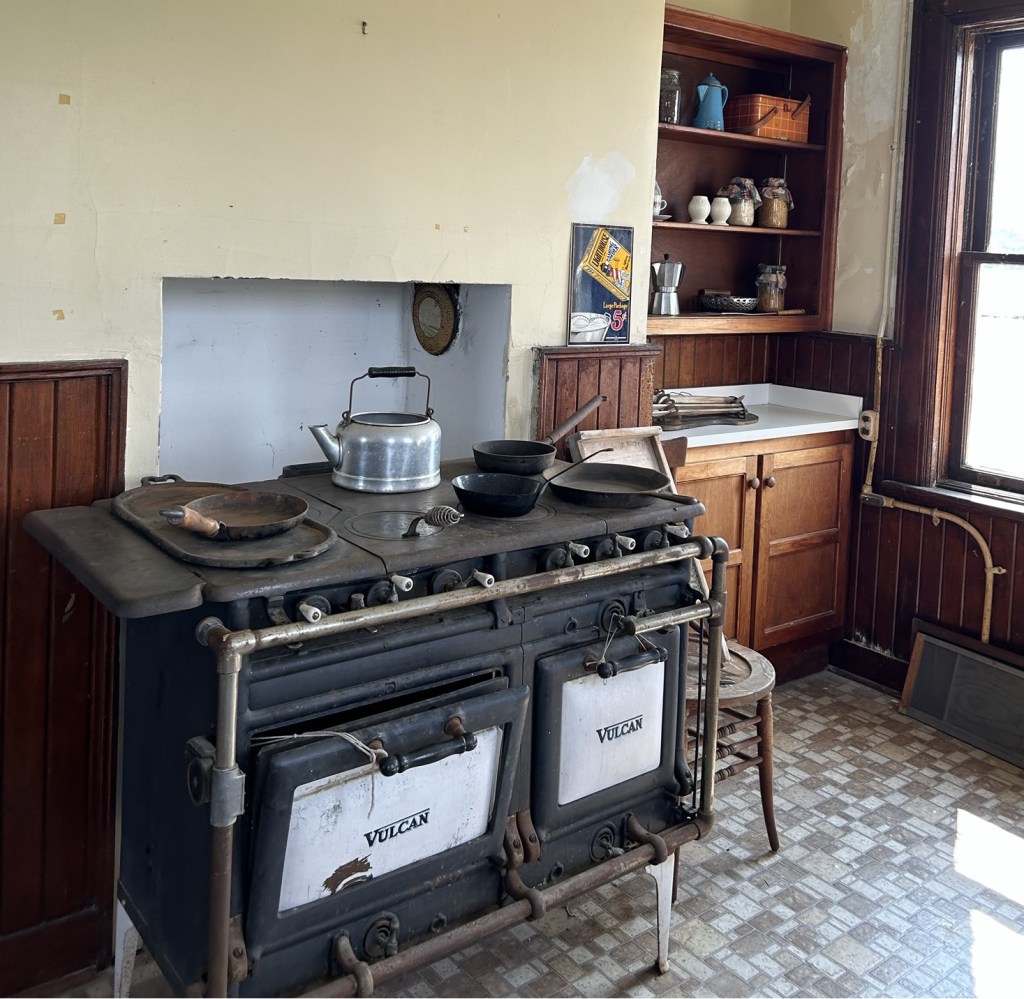
Mrs. Murdock married again after she retired, and unfortunately, she found herself widowed a second time as spouse #2 also went for the long swim. She did not try again after that.
Her son became the lighthouse keeper when she stepped down after 51 years. He must’a been 50 himself when he took it over (he’d been the “assistant keeper” since 1880).
They built the new lighthouse because the old one wasn’t placed well – it was set back from the breakwater on the river and the mariners couldn’t see the point to which the breakwater extended.
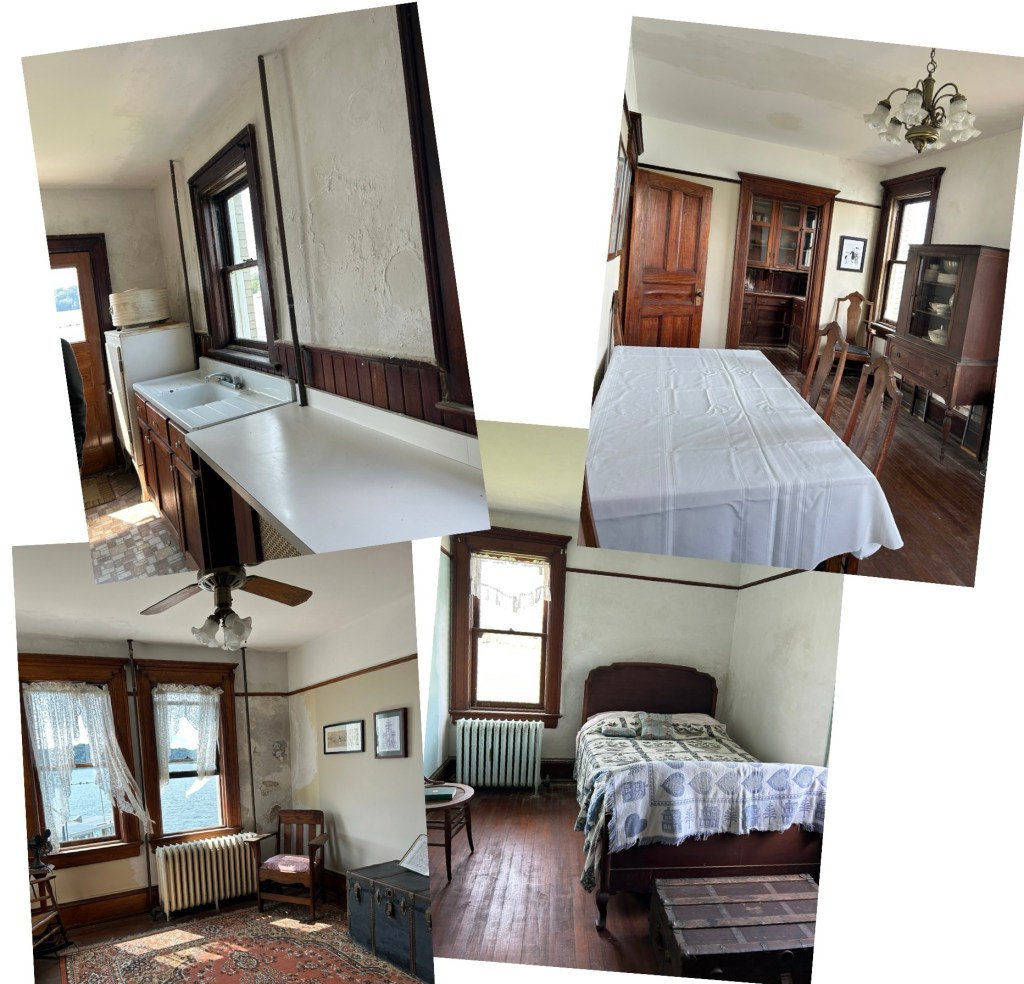
They have the lighthouse furnished circa 1930. They never did get sewage or fresh water hookups – instead they used a cistern and rainwater, and pumped river water for bathing and flushing. Yeck.